
September 7–13, 2026 · Official reading: Proverbs 1–4; 15–16; 22; 31; Ecclesiastes 1–3; 11–12
The First Code in Isaiah, in Twenty-Five Minutes
I taught this to a room of thirteen and fourteen-year-olds. Now I am going to teach it to you — and I am going to make you do the work they did.

Answer this before you read the next line. Why does nobody understand Isaiah?
Do not skip it. You have an answer, even if you have never said it out loud. Most people land somewhere near it is old, or the language is hard, or quietly, I am not smart enough for it. Here is what a thirteen-year-old said when I asked his class the same question.
“He wrote in code.”
Four words, and he is right. Isaiah is not hard the way a dense book is hard. It is written in code, on purpose, by design — and nobody ever handed us the key. That is the whole problem. Not your intelligence. Not your faith. A missing key. I want to hand you one, and it takes about twenty-five minutes.
First, look at what you just finished reading

For three weeks the Church read Psalms — written largely by David, who saw the coming of Christ in vision. Then one week of Proverbs and Ecclesiastes, written by David’s son Solomon, who asked God for wisdom and got it.
And then, immediately, Isaiah.
That order is not an accident, and if you were reading along last week you already have the decoder ring in your hands. Here it is: “The thing that hath been, it is that which shall be… and there is no new thing under the sun.” — Ecclesiastes 1:9
“That which hath been is now; and that which is to be hath already been.” — Ecclesiastes 3:15
Read those twice. Solomon says the same thing two ways, because once was not enough. Most of us read that as a tired old man saying nothing ever changes. It is not. It is a rule about how prophecy works, and it is the single most useful sentence you can carry into Isaiah.
What has been is what will be.
And if you think that is only Solomon’s opinion, look at who else says it — in the same breath where the Savior commands us to search this book:
“And all things that he spake have been and shall be, even according to the words which he spake.” — 3 Nephi 23:3
Have been. And shall be. Solomon and the Savior, describing the same book the same way.
Now use it. This is your turn.
Here is the situation Isaiah is writing into. He lives more than seven hundred years before Christ. He has watched the northern tribes carried off. Assyria is coming down on Jerusalem.
And there is one nation everybody looks to when trouble comes. The largest military in the world. The deepest treasury. Centuries of history behind it. A civilization so old it was ancient when Israel was young.
Isaiah’s people keep running to that nation for protection instead of running to the Lord. He names it over and over. He warns them about it over and over.
Now apply Solomon’s rule. What has been is what will be. If Isaiah saw our day — and he says he did — then he is not only describing a country on a map in 700 BC. So here is the question, and I want you to actually answer it before you read on.
What country is he talking about?
Take a second with it. When I asked that in Sunday School, a hand went up in about four seconds.
“America.”
I had not told him. He had the rule and he had the description, and there is only one answer that fits. The nation Isaiah names is Egypt.
Ding. That is your first code. Write it down.
When Isaiah says Egypt, look for the superpower a covenant people trusts instead of God. When you reach Isaiah 30, watch the chapter turn over on you — they are bent on going down to Egypt, but have not inquired at my mouth.
That is interpretation, not translation, and I label it that way every time. But labeling a thing does not mean whispering it. If you want the whole case — every passage it rests on, and how to prove me wrong if I am — it is in When Isaiah Says Egypt, He Means America.
For today, Egypt is not the point. The point is that you just decoded something in Isaiah. Hold onto how that felt, because that is what the next two years are made of.
One more question, and this one is bigger than Isaiah

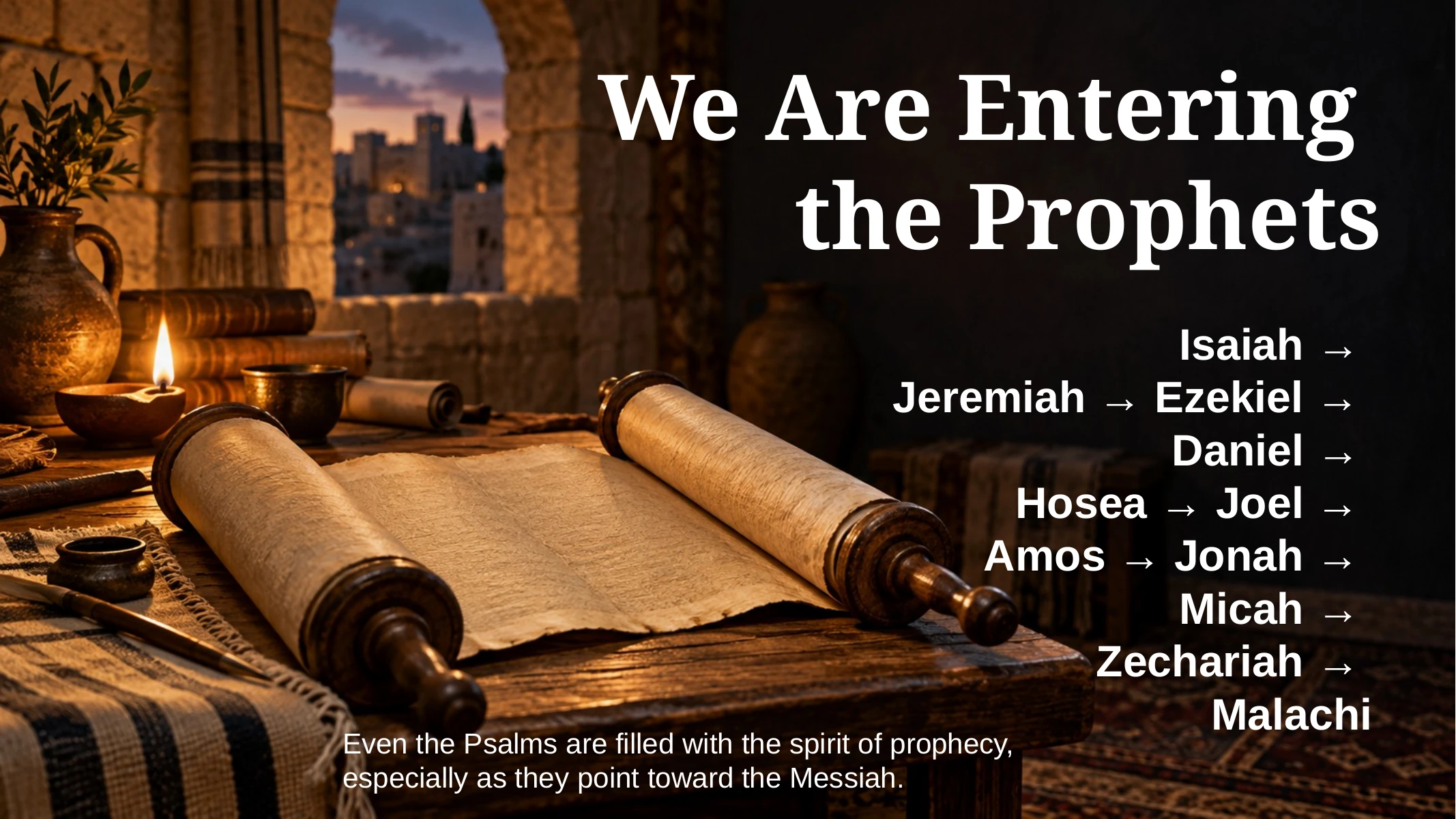
Isaiah was the first of the great prophets after David and Solomon. So what do you suppose the prophets who came after him did with his codes?
They used them. Jeremiah. Ezekiel. Daniel. Hosea. Micah. And on the other side of the ocean — Nephi, Jacob, Abinadi, quoting him chapter after chapter. Then try this one: which book of the Old Testament does the New Testament quote most?
Isaiah.
And when the Savior stood up in the synagogue at Nazareth to announce His own ministry, He opened a scroll and read — you guessed it — Isaiah 61:1–2. Then He rolled it up, handed it back, sat down, and told the room those words had just been fulfilled in front of them. And then they tried to kill Him. Ran Him out of town and up the hill to throw Him off a cliff — Luke 4:16–30.
His first public sermon was an Isaiah reading, and it nearly got Him killed in His hometown.
Why?
Well — that is an amazing story for another time.
So crack this one book and you have not learned one book. You have learned the language all the others are speaking.
Where is Christ in this week’s chapters?

David wrote the Psalms. He also saw, in vision, a king who would come out of his own line — and one of that king’s many names was the Son of David. Isaiah spoke of a voice preparing the Lord’s way (Isaiah 40:3). The Gospels identify John the Baptist with that preparing voice and describe his camel-hair clothing and food (Matthew 3:3–4).
Who is that?
John the Baptist — and the one he baptized was the Son of David.
Now read Isaiah’s version of the promise in Isaiah 9: “For unto us a child is born, unto us a son is given… and his name shall be called Wonderful, Counsellor, The mighty God, The everlasting Father, The Prince of Peace.” — Isaiah 9:6
If those words sound like music, that is because Handel set them to it — seven centuries after Isaiah wrote them, and seven centuries before that, God had already said them.
Which of those five names do you need this week? Answer that one honestly and you have done today’s most important work.
Before you go: where are you actually?

SKIP · SKIM · READ · STUDY · SEARCH · FEAST · TREASURE
Find yourself on that list. Nobody is watching.
And notice that skip is on it. Skip is level one, not a failure. I have skipped Isaiah. For years. Most of us hit 2 Nephi 12, our eyes go to the floor, somebody says the words are beautiful, and we move on to something we can talk about.
The goal is not to jump to the end of the list. It is to move one word to the right.
Skip to skim. Skim to read. Read to study. One word. That is the whole assignment.
Why this is a commandment at all
The Savior had just finished reading an entire chapter of Isaiah out loud to the Nephites. Then He stopped and said this:
“And now, behold, I say unto you, that ye ought to search these things. Yea, a commandment I give unto you that ye search these things diligently; for great are the words of Isaiah.” — 3 Nephi 23:1
Search. Not read.
And notice the order. He used the book in front of them first, and assigned it after. That is not advice. That is an apprenticeship.
He named Isaiah by name — then four verses later widened it to all the prophets. The widening is the stronger material, because it means the method He taught on Isaiah is the method for the whole shelf. I walked through that whole passage in What Country Is Isaiah Actually Talking About?
This week

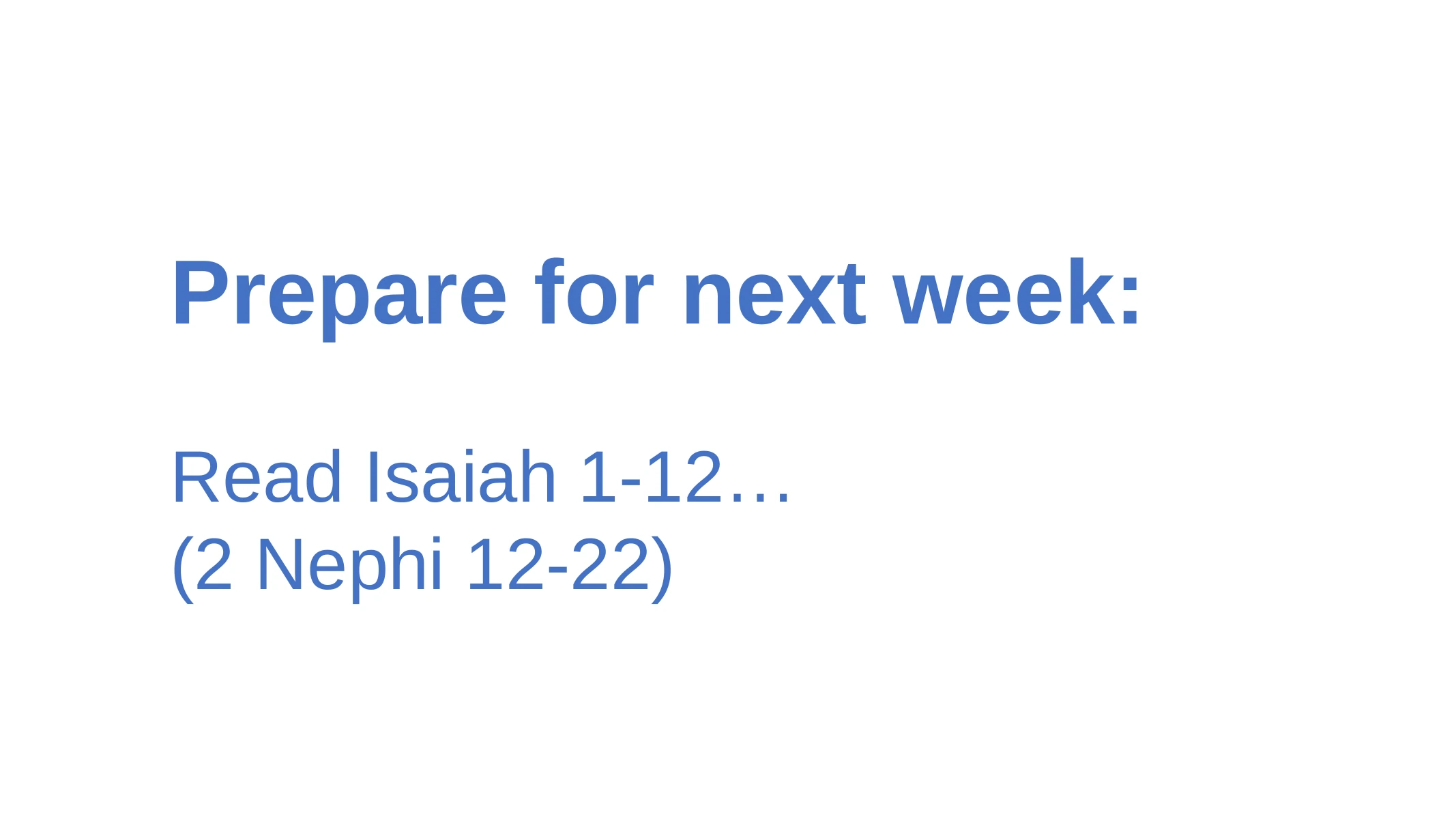
I could tell you to read all twelve chapters. I did not tell my class that, and I am not telling you.
Read the first two or three. You do not have to read it all.
In the Book of Mormon, Isaiah 2–12 appears as 2 Nephi 12–22 — and there is something strange about which chapters Nephi chose to include. He left out Isaiah 1 entirely. I worked through that, and through Nephi’s own method for reading Isaiah, in Did Nephi Mean What He Said About Isaiah?
Carry five questions:
- Where are we?
- What is the story?
- What should I watch for?
- Where is Christ?
- What question should I bring Sunday?
Sunday should be where you discuss what you found. Not the first time you see it.
If you are teaching this at your own table
You need almost nothing. Write the seven words on a piece of paper. Read the two verses from Ecclesiastes. Describe Isaiah’s superpower without naming it and let somebody guess. Read Isaiah 9:6 slowly. Ask which of the five names your family needs this week.
Ask more than you tell, and wait longer than is comfortable. Nearly everything that landed in my class came out of a thirteen-year-old’s mouth, not mine. My whole job was asking the next question and keeping quiet.
One of the boys mentioned, almost in passing, that his family already knew some of this. So I made him share it — the decode family. The best thing that happened in that room did not come from me. It came from a kid.
And before you close this, check what you walked out with.
You learned your first code word today. Egypt. It means America. The superpower a covenant people trusts instead of God. You did not take my word for it — you had Solomon’s rule, you had the description, and you named the country yourself.
One word. That is how this book opens.
That is what this is for. Not a scholar handing down conclusions. A room of beginners, whatever our ages, with the same key in hand, checking it against the text and calling out what we find.
I bear my testimony that the code is really there… In the name of Jesus Christ. Amen.
Download the complete lesson slides (PDF, 10 slides).
Part of a weekly Come Follow Me series walking through Isaiah. Ken Krogue is the founder of The Covenant Project and has been studying Isaiah for more than twelve years.
Human → AI → Human: Conceived and directed by Ken Krogue → researched, challenged, and developed with Orson (Claude) and Nathan (ChatGPT) → with Ken Krogue holding final editorial judgment. Visual concepts and production were developed with AI under human editorial direction.